

“As minorities gain visibility and achieve victories, in some sectors the idea that we are a threat grows stronger.”
The transgender writer, part of the Chilean delegation at FIL Buenos Aires, observes that her community moves in a world that advances and retreats.
"We have to change the narrative so that our journey becomes a moment of celebration rather than a tragedy."
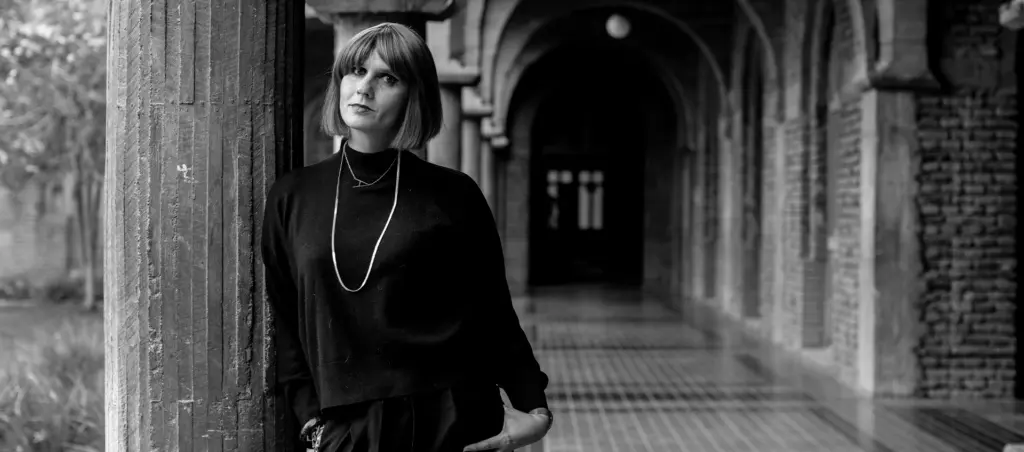
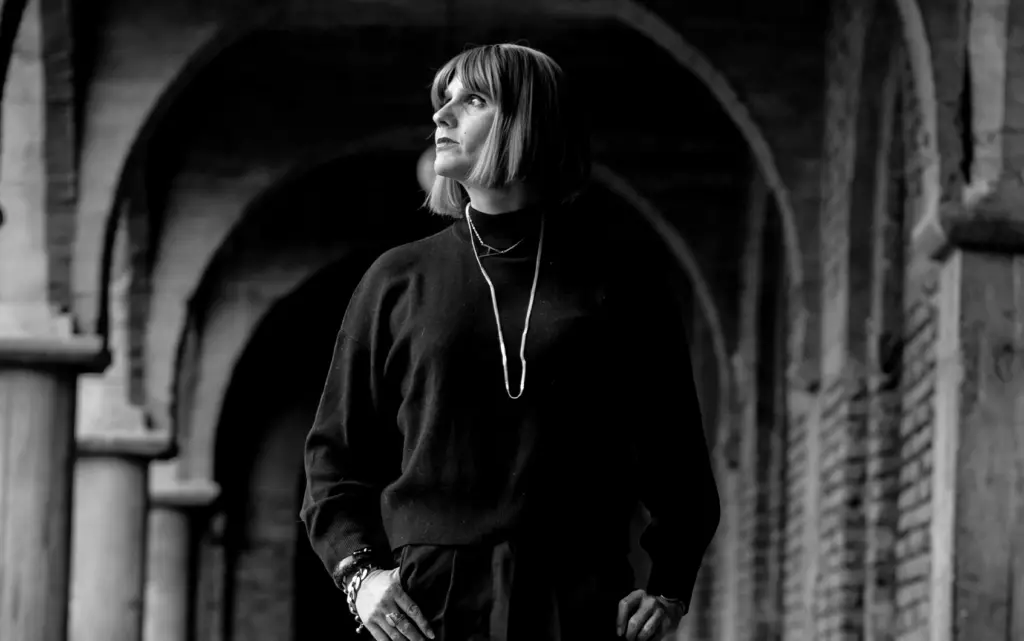
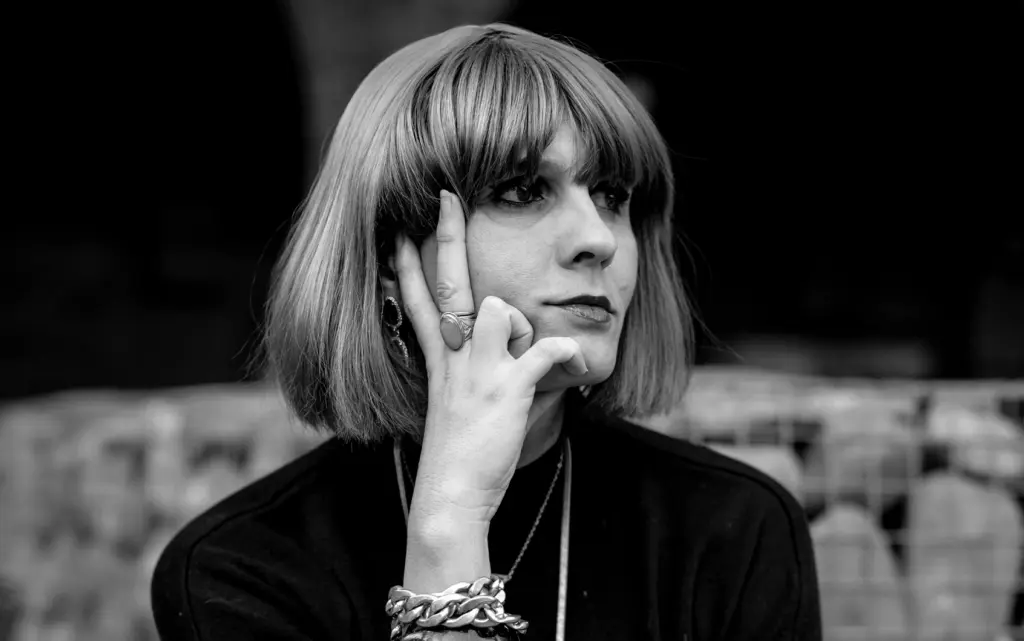
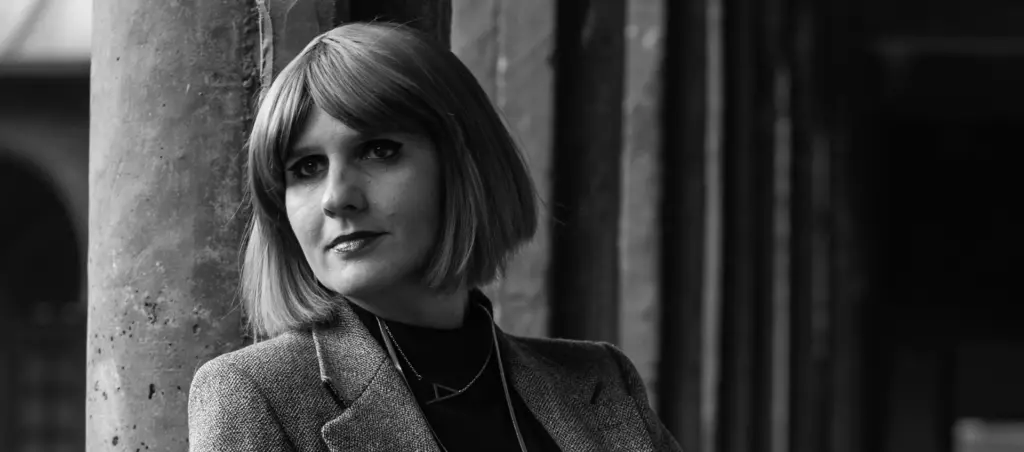
"This journey was something wonderful for me, and writing was my great companion," admits trans writer Ariel Florencia Richards.
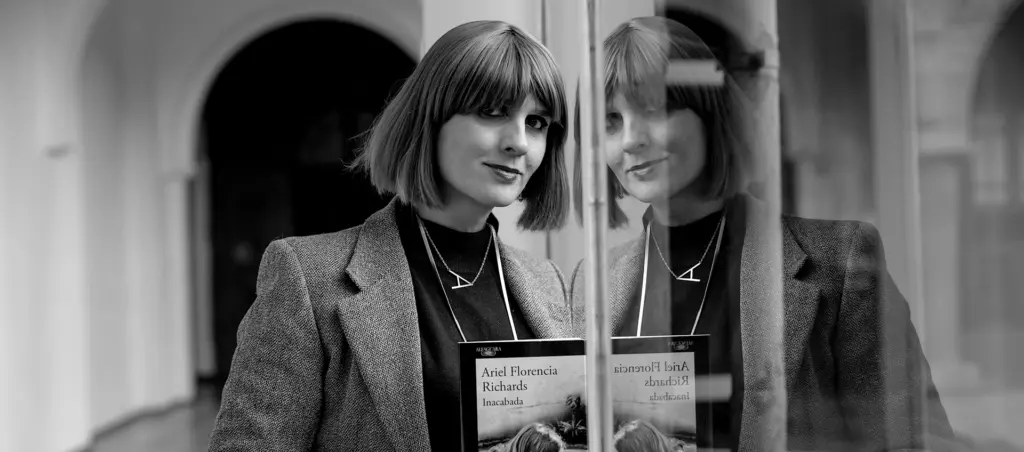
Her third book, Inacabada, and the first she wrote as a woman, established the narrative through the story of Juana, a young woman who seeks to rebuild her relationship with her mother through her own rebirth. This work expanded the cultural and literary discourse on transgender reality.
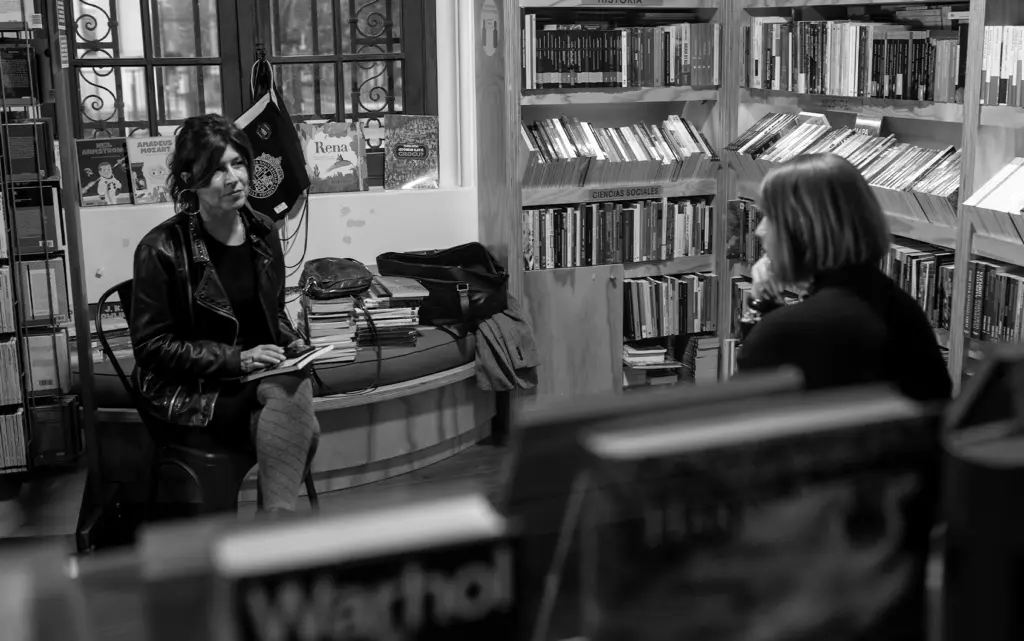
"Cultural production, such as literature, visual arts, and films, has broadened the scope of what we understand by 'gender'. Literature has made a strong impact here, although it has not been the only one; cinema, visual arts, etc. have also done so," says the writer and designer from the Catholic University of Chile, who holds a master's degree in Creative Writing from New York University and is part of the delegation of Chilean authors at the 2023 Buenos Aires International Book Fair.
—Why do you think Inacabada has caused such a stir in the media?
—We had a debt as a society, and the novel has been a very good platform for broadening dialogue and having important conversations, something that has been amplified through the media. Perhaps today we are better prepared to face these kinds of conversations, to ask ourselves more questions and leave certain ideas behind. But let's not fool ourselves: while we are gaining representation, and the processes of acceptance and integration are accelerating in other social spheres, the truth is that this reality does not change so quickly...
Richards cites the example of Una mujer fantástica (A Fantastic Woman), the Chilean film directed by Sebastián Lelio, which won an Oscar in 2017 for Best Foreign Language Film. "Here, Daniela Vega (the transgender actress who plays the lead role) made a tremendous contribution when she appeared on stage to receive the award and then when she was welcomed at the Government Palace. We all got the impression that the issue was largely resolved, but that is not the experience of certain social strata. Not all transgender people are safe from violence and discrimination; these are extremely slow processes...
—Everything is precarious due to global political changes, for example, with the rise of fascism and ultra-conservative groups...
—As minorities exist and gain visibility and achieve victories, the idea that we are a danger to society is reinforced, particularly by a political sector that feels threatened by the existence of transgender people. Our progress brings with it its own avalanche.
—Deep down, they are moving on extremely fragile ground.
—It is a world that moves forward and backward. In the Latin American political arena, we have conquered territory thanks to the advances of progressivism, but then the scenario changes and setbacks occur... My novel is called Inacabada (Unfinished) for that reason too, because these are processes that have no end but are in constant motion.
She pauses and acknowledges:
—The space for transgender people is very fragile, which adds to a personal and emotional process that is also very complex. So, if you don't have a place of family or emotional support, and on top of that there is a part of society that considers people like me dangerous, our existence becomes extremely vulnerable.
—How was your case?
—I was able to transition at the age of 37 with great difficulty, but there are girls, boys, and adolescents who face enormous adversity in expressing themselves, standing up against what is happening, and finding their own place. I would like us to live in a society that is more accepting of individuality.
—Did this have anything to do with your decision to transition as a woman at the age of 37?
—Among transgender groups, it is often said that if you don't decide to take the plunge as an adult, you die... You reach a point where nothing makes sense anymore unless you break away from the structure that has sheltered you for so long; it's the only way to let your true self emerge. My 37th birthday was the moment of the abyss. I had everything to be happy, but I wasn't myself, and I had this debt pending since forever. Mine was a life-changing decision.
—So your book has been therapeutic on a social level?
—I'm very active on Instagram, and not a week goes by without a father or mother writing to me whose son or daughter is beginning their transition and they don't know how to support them; there is a lot of loneliness in both cases. My book has helped to generate new discussions, but we have a lot to learn in order to change the narrative so that transition becomes a moment of celebration rather than a tragedy. This is also because the experience of transition is very asymmetrical: for mothers and fathers, it is often a loss, while for children, it is a rebirth. It is difficult to counterbalance these two forces, but we can choose what to see, whether it be the light or the dark. I choose the narrative of light and thus promote change as a society.